Recap: Clean Air, Clear Returns – The Economic Imperative of Indoor Air Quality for Europe and Beyond
On Friday 12 December, the EDIAQI and K-HEALTHinAIR projects, both members of the IDEAL Cluster, co-hosted a new session of the EDIAQI Webinar Series entitled Clean Air, Clear Returns. The webinar examined the economic costs of poor indoor air quality, alongside the commercial and societal opportunities associated with improving indoor environments across Europe.
While the health impacts of air pollution are increasingly well recognised, the session focused on a complementary and often under-explored dimension: the economic consequences of inaction and the returns on investment associated with better indoor air quality. Drawing on expertise from health economics, market innovation, and European research projects, the discussion highlighted why indoor air quality should be treated as both a public health priority and an economic imperative.
Measuring the Cost of Inaction: The Economic Burden of Poor Indoor Air Quality
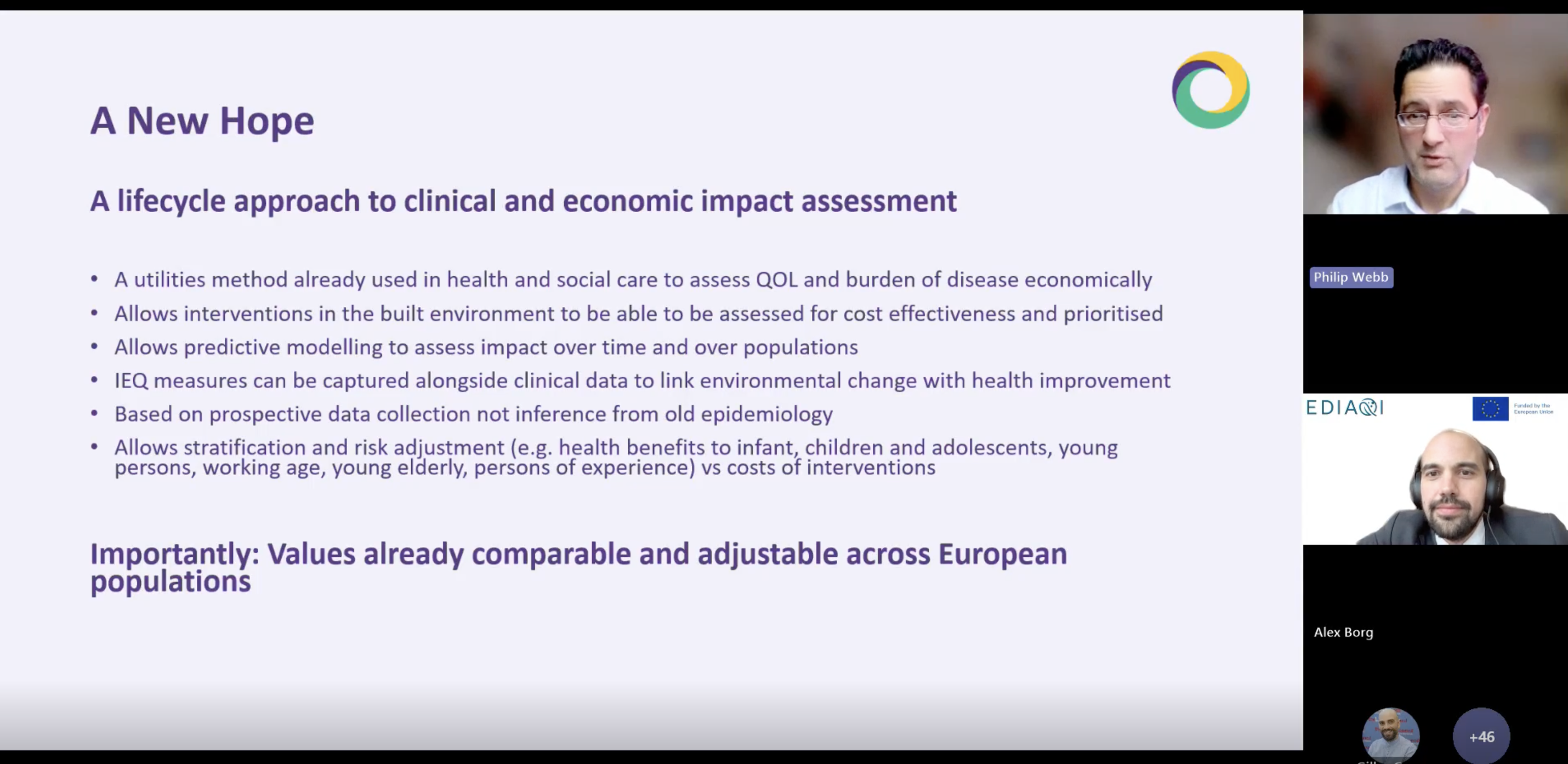
Opening the substantive discussion, Dr Philip Webb, Chief Executive Officer of Health and Wellbeing 360 Ltd, addressed the methodological challenges involved in quantifying the economic burden of poor indoor air quality.
Dr Webb explained that many existing economic assessments rely on population-based models originally developed for outdoor air pollution, which fail to capture the complexity of indoor exposure. These approaches often overlook critical indoor environmental factors, including ventilation, temperature, humidity, lighting, and noise, and rarely account for variations in exposure duration, individual vulnerability, or social inequality.
He presented an alternative life-cycle and utility-based approach, already widely used in health and social care, which enables the cost effectiveness of indoor interventions to be assessed more accurately. By linking prospective indoor environmental data with clinical outcomes and quality of life indicators, this method allows decision makers to prioritise interventions based on measurable health gains and long-term economic value.
A real-world case study demonstrated how targeted indoor interventions, such as mobile filtration and ventilation in residential settings, can deliver substantial improvements in quality of life, reductions in medication use, and wider benefits for families. Dr Webb underlined that behavioural change, alongside technological solutions, remains one of the most cost effective and impactful measures for improving indoor air quality.
From Awareness to Action: Business Opportunities in Indoor Air Quality
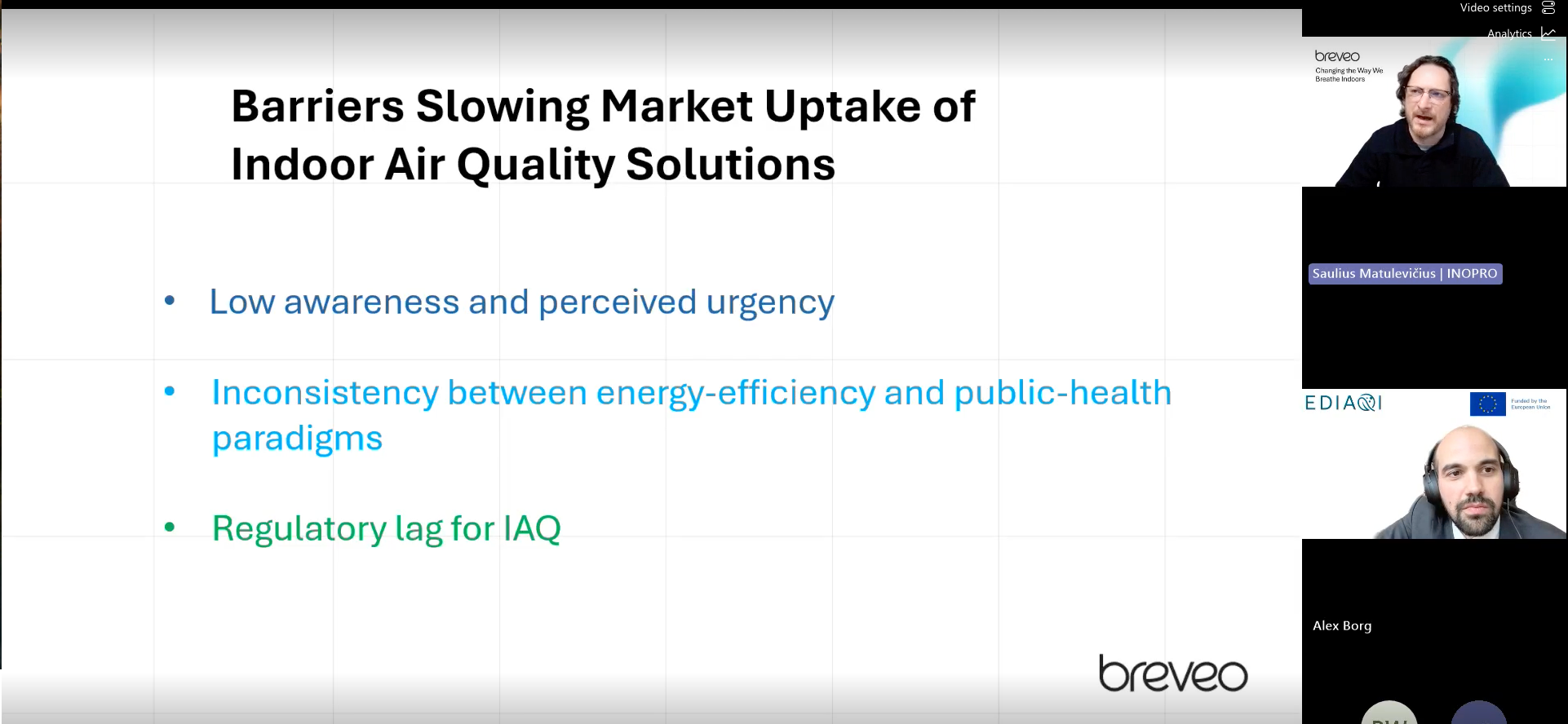
Dr Saulius Matulevičius, Founder and Chief Executive Officer of Breveo, explored the commercial landscape for indoor air quality technologies and services and the factors driving market growth.
He highlighted that demand for indoor air quality solutions is increasing rapidly, driven by growing awareness of the links between indoor environments, cognitive performance, productivity, and wellbeing. However, he also noted that market uptake continues to face structural barriers, including low perceived urgency, fragmented regulation, and persistent inconsistencies between energy efficiency frameworks and public health objectives.
Drawing on operational deployments, Dr Matulevičius illustrated how translating complex indoor air quality data into human-centred insights can deliver tangible returns, including reduced over-ventilation, energy savings, and improved decision making for building owners and facility managers. He argued that clearer and more specific regulatory frameworks for indoor air quality, alongside targeted public funding for schools, hospitals, and public buildings, could significantly accelerate adoption.
Looking ahead, he emphasised that Europe has a strong opportunity to position itself competitively in the global indoor air quality market, provided that health-driven standards, harmonised metrics, and innovation-supportive policies are put in place.
From Research to Impact: Public Value and Exploitation in K-HEALTHinAIR
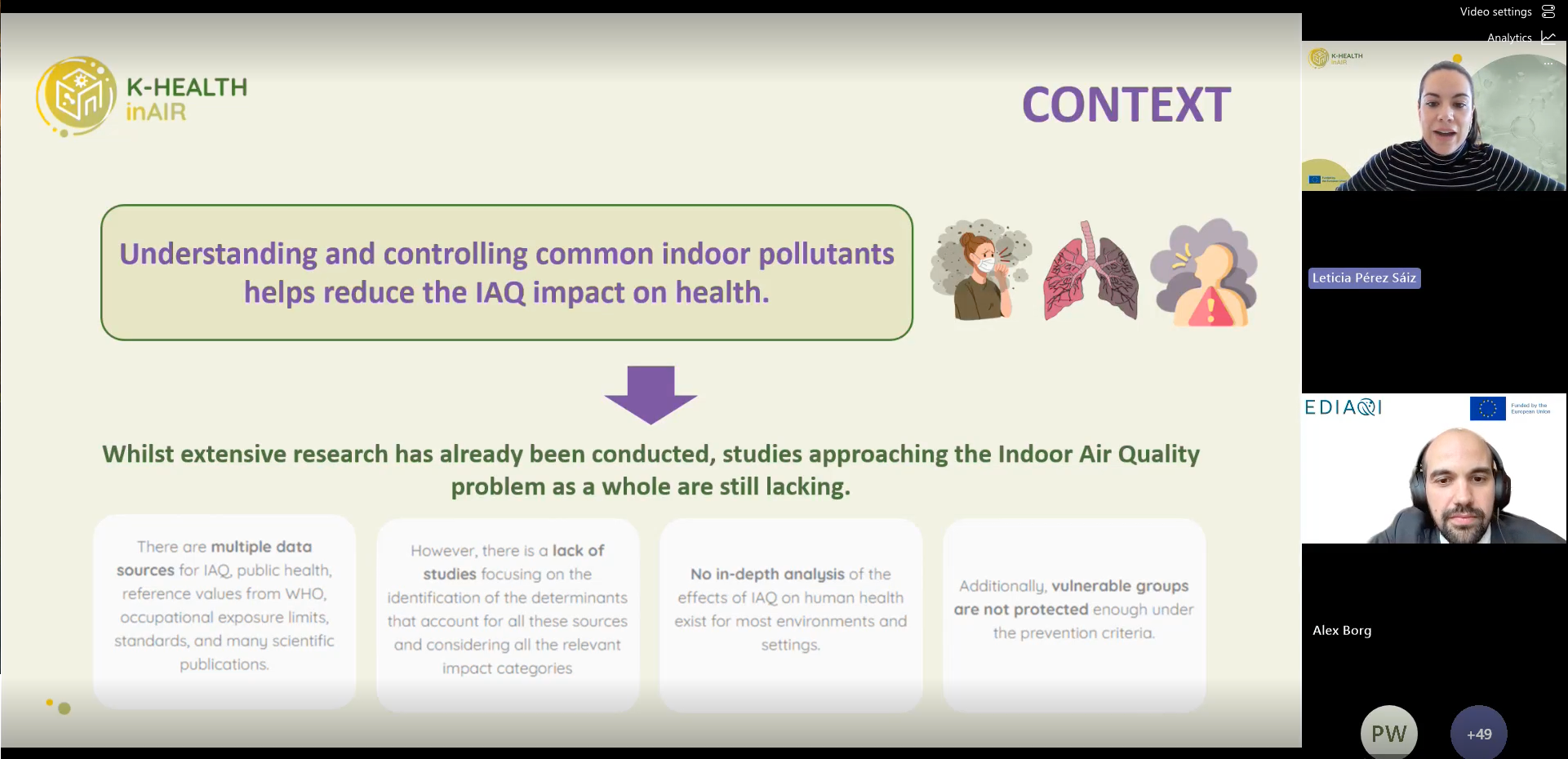
Dr Leticia Pérez Saiz, representing the K-HEALTHinAIR project, presented the project exploitation strategy, which places a strong emphasis on public value and open access.
She outlined how K-HEALTHinAIR is translating extensive scientific research into practical and accessible outputs through its Open Access Platform, which integrates a Data Management Module with a Knowledge Sharing Module. These tools are designed to serve a wide range of stakeholders, including researchers, policymakers, industry actors, educators, and citizens.
Dr Pérez Saiz emphasised the importance of tailoring project outputs to specific audiences, ensuring that knowledge on indoor air quality is both scientifically robust and usable in real-world decision making. She highlighted the potential of emerging tools, including wearable sensors, while underlining the importance of standardised data collection processes to support comparability, trust, and policy relevance across Europe.
Turning Data into Decisions: The EDIAQI KNOW Dashboard
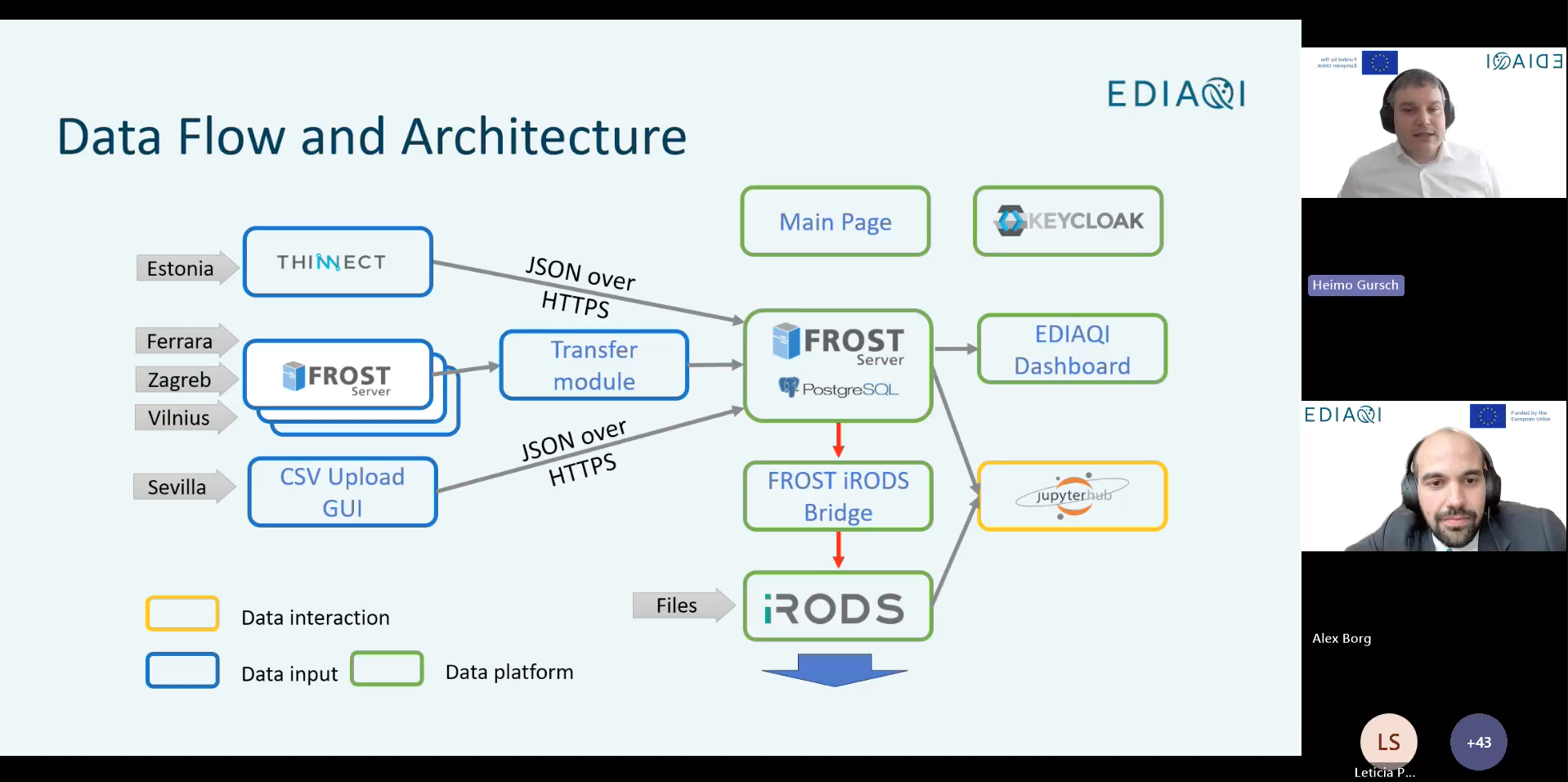
The final presentation was delivered by Heimo Gursch, Research Fellow and Project Manager at Know Center, who introduced the EDIAQI KNOW Dashboard.
He demonstrated how the platform integrates data from multiple pilots and monitoring campaigns into a modular, secure, and FAIR-compliant architecture, enabling users to monitor, compare, and interpret indoor air quality across different contexts. A key strength of the dashboard lies in its ability to simplify complex environmental data for non-technical users, while remaining sufficiently robust for expert analysis.
Mr Gursch highlighted the dashboard potential as both a market-ready product and as a component that can be integrated into consultancy and advisory services. He also stressed the importance of open data principles, transparency, and interoperability in building trust and supporting wider adoption among public authorities, schools, workplaces, and building owners.
Panel Discussion: Linking Health, Economics, and Markets
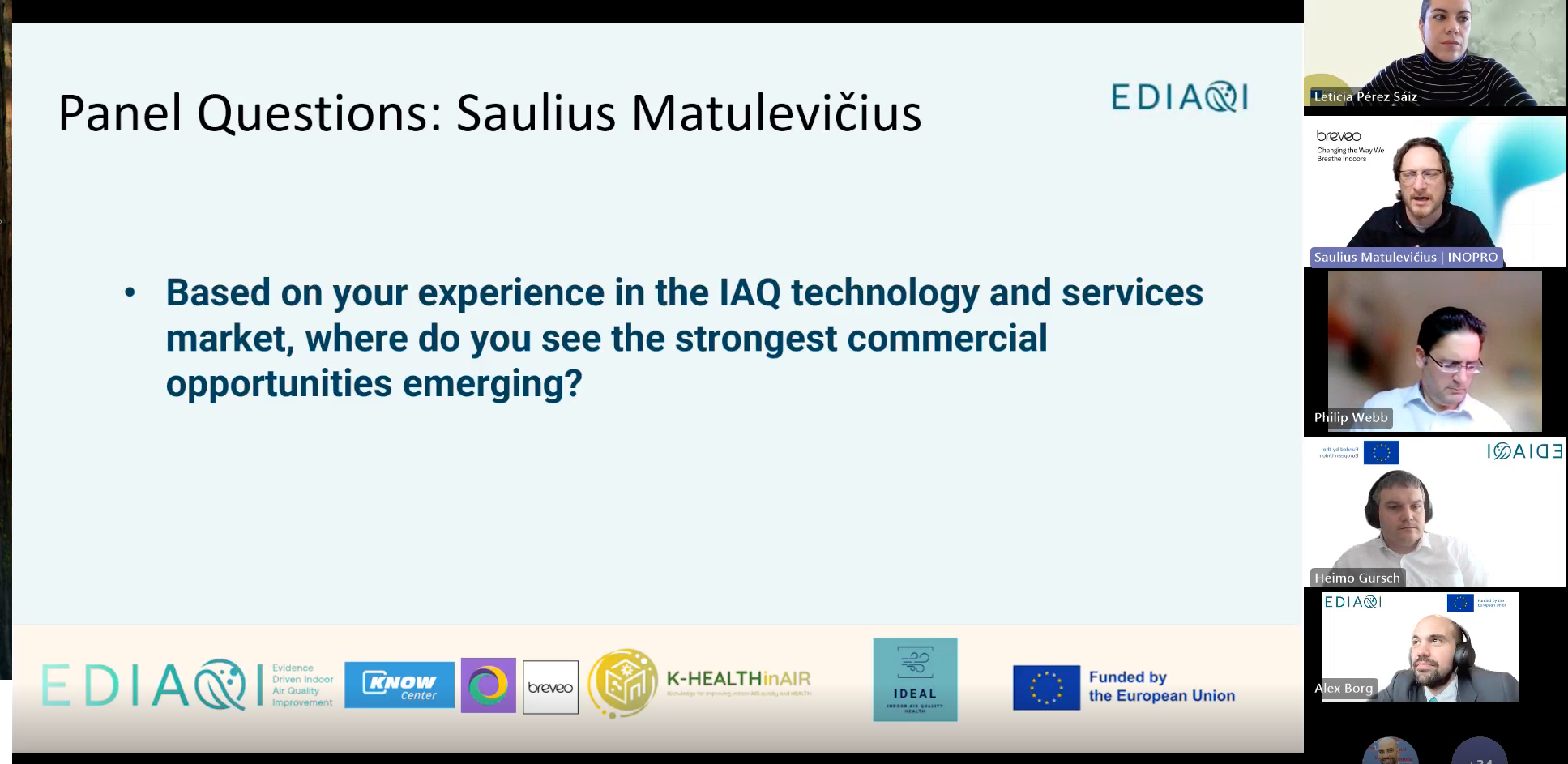
The panel discussion brought together clinical, economic, technological, and policy perspectives. Panellists reflected on:
- The substantial but often underestimated economic costs of poor indoor air quality, extending beyond healthcare expenditure to productivity losses, educational outcomes, and long-term societal impacts
- The need for harmonised measurement methodologies to support better investment decisions and European policy making
- The growing commercial potential of indoor air quality solutions, alongside persistent regulatory and awareness gaps
- The importance of data-driven tools that translate evidence into actionable insights for diverse user groups
Audience questions further explored pathways for scaling solutions, aligning health and energy objectives, and ensuring that innovation contributes to reducing inequalities rather than reinforcing them.
Key Takeaways
Three clear priorities emerged from the discussion:
- Poor indoor air quality carries significant economic costs, affecting health systems, labour productivity, and long-term societal wellbeing
- Investment in indoor air quality delivers strong returns, particularly when combined with behavioural change, user-centred design, and accessible data tools
- Harmonised measurement, open data, and targeted regulation are essential to unlock both public health benefits and sustainable market growth across Europe
Watch the Recording and Stay Engaged
The full recording of Clean Air, Clear Returns is available via the EDIAQI Webinar Series, highlighting the strong complementarity between EDIAQI and K-HEALTHinAIR in advancing healthier indoor environments through evidence, innovation, and collaboration.