Recap: The Promise and Perils of AI-Driven Sensor Calibration for Indoor Air Quality

On Friday 30 January, the EDIAQI and NextAire projects co-hosted a new session of the EDIAQI Webinar Series, examining the growing role of AI- and machine-learning-driven calibration in indoor air quality (IAQ) monitoring.
With AI continuing to dominate public and policy debates, the webinar explored how AI-based calibration can unlock the potential of low-cost sensors — while also highlighting the technical, ethical, and governance challenges that must be addressed to ensure trustworthy real-world deployment.
From Low-Cost Sensors to High-Value Data
Low-cost IAQ sensors enable dense, high-resolution monitoring but remain limited by sensor drift, environmental interference, and variability across devices. Speakers emphasised that AI-driven calibration should not be framed simply as “low-cost monitoring”. Instead, it enables in-field calibration, improves data quality, and supports more advanced uses such as prediction, health analysis, and automated building responses.
At the same time, participants stressed that AI does not replace validation. Without robust scientific foundations and transparency, AI-enhanced outputs risk creating false confidence rather than actionable insight.
AI-Assisted Calibration and Prediction in Practice
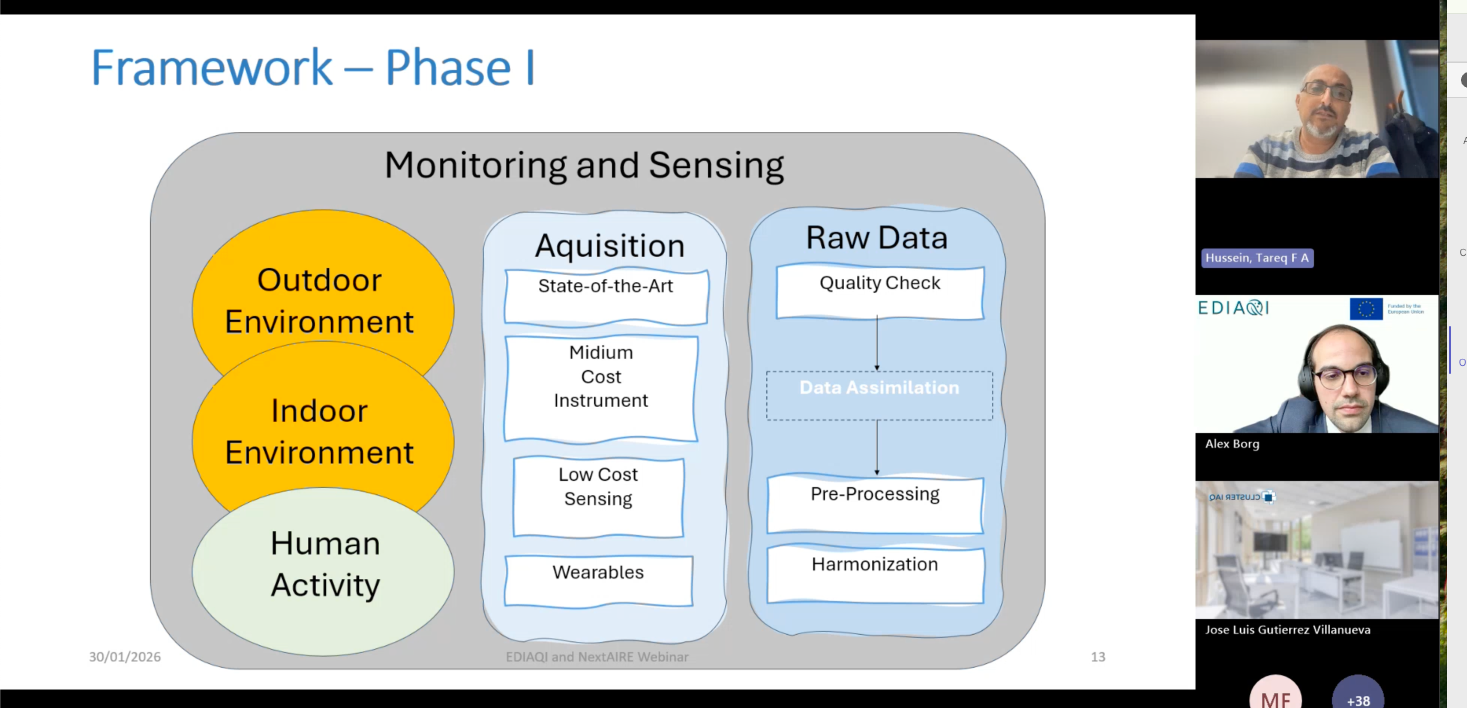
Dr Tareq Hussein (University of Helsinki) outlined how ML and AI can enhance calibration and prediction by combining sensor data with meteorological variables, proxy indicators, and temporal patterns. These approaches can fill data gaps, improve spatial resolution, and extend the analytical value of sensor networks.
A key advantage highlighted was the ability to calibrate sensors directly in operational settings, rather than relying solely on laboratory alignment. However, Dr Hussein underlined the importance of clearly communicating uncertainty and confidence levels, particularly when AI-assisted outputs inform ventilation or other automated decisions.
From Sensors to Signals: Promise and Limits
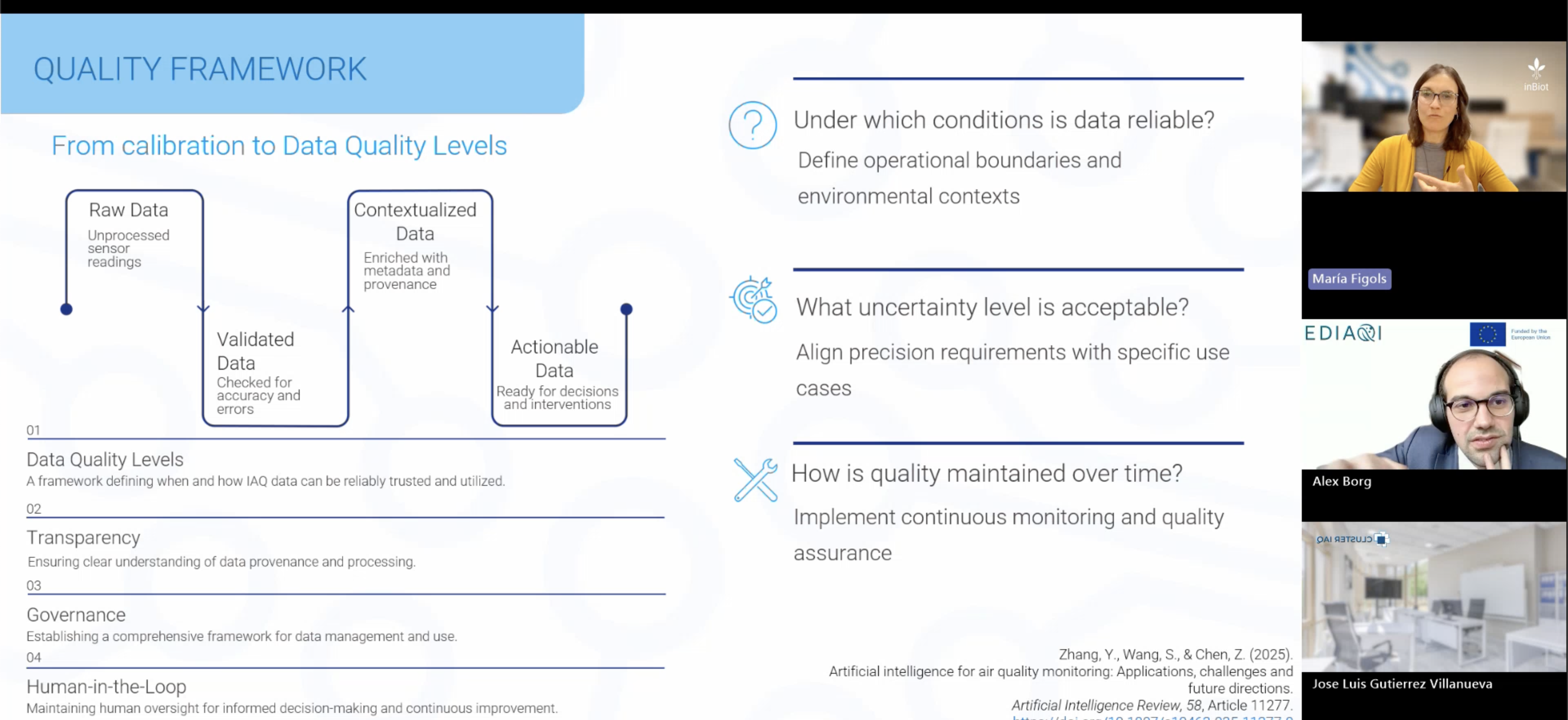
Maria Figols (inBiot Monitoring) focused on why indoor environments are especially challenging for AI-based calibration. Occupant behaviour, ventilation strategies, spatial variability, and rapid temporal change mean calibration must be treated as an ongoing lifecycle process, not a one-off technical fix.
She stressed that while AI can address non-linear sensor behaviour and aging effects, model performance is highly context dependent and may degrade over time. Privacy and trust were central themes, particularly where IAQ indicators such as CO₂ act as proxies for occupancy. Her key message was clear: validation must come before intelligence, with AI supporting — not replacing — strong data governance.
From EDIAQI to NextAire: Health-Relevant Insights
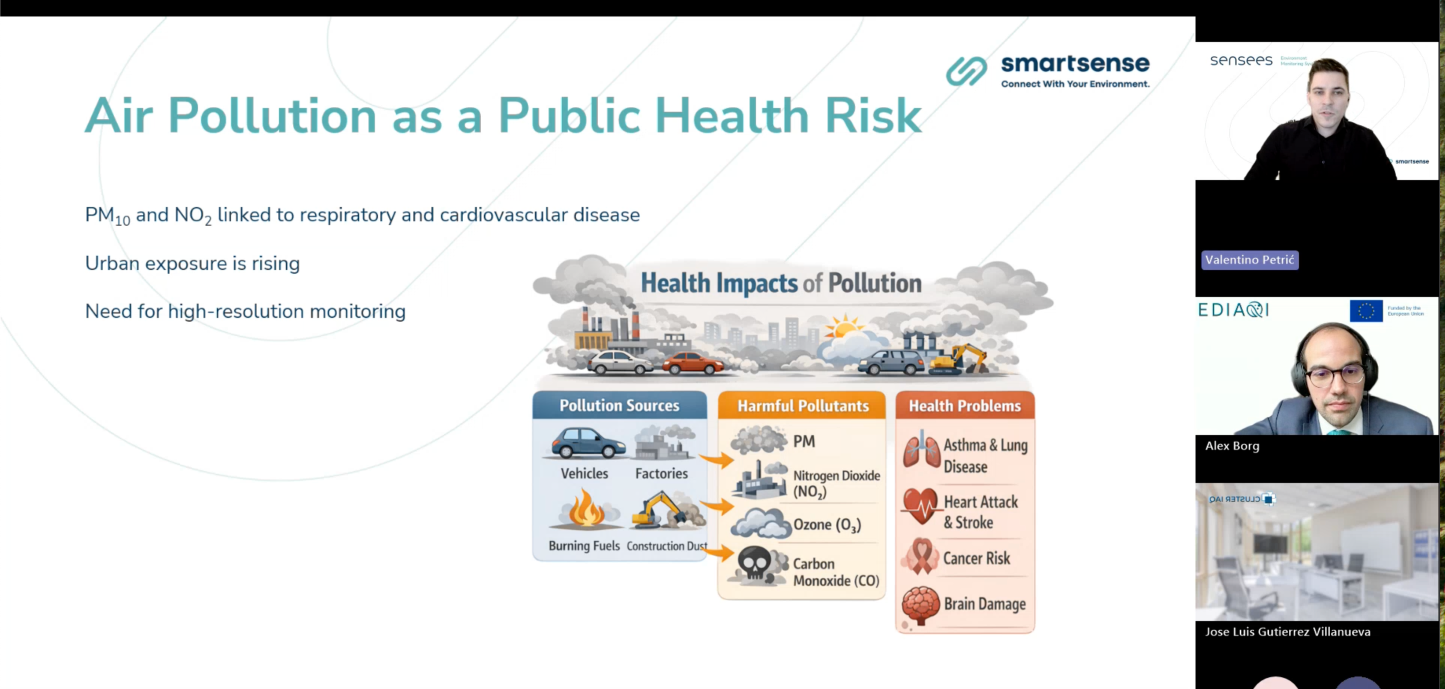
Drawing on work from the Zagreb sensor network, Valentino Petrić (Smart Sense) demonstrated how ML-based recalibration can deliver substantial improvements in data reliability. Using an XGBoost approach for PM₁₀ and NO₂ sensors, his work showed error reductions of up to 82%, with particularly strong performance during pollution peaks.
He highlighted why calibration quality is critical when IAQ data informs health impact analysis, local pollution event detection, or policy-relevant assessments, and showed how EDIAQI’s focus on uncertainty provides a strong foundation for NextAire’s operational ambitions.
From Evidence to Trust
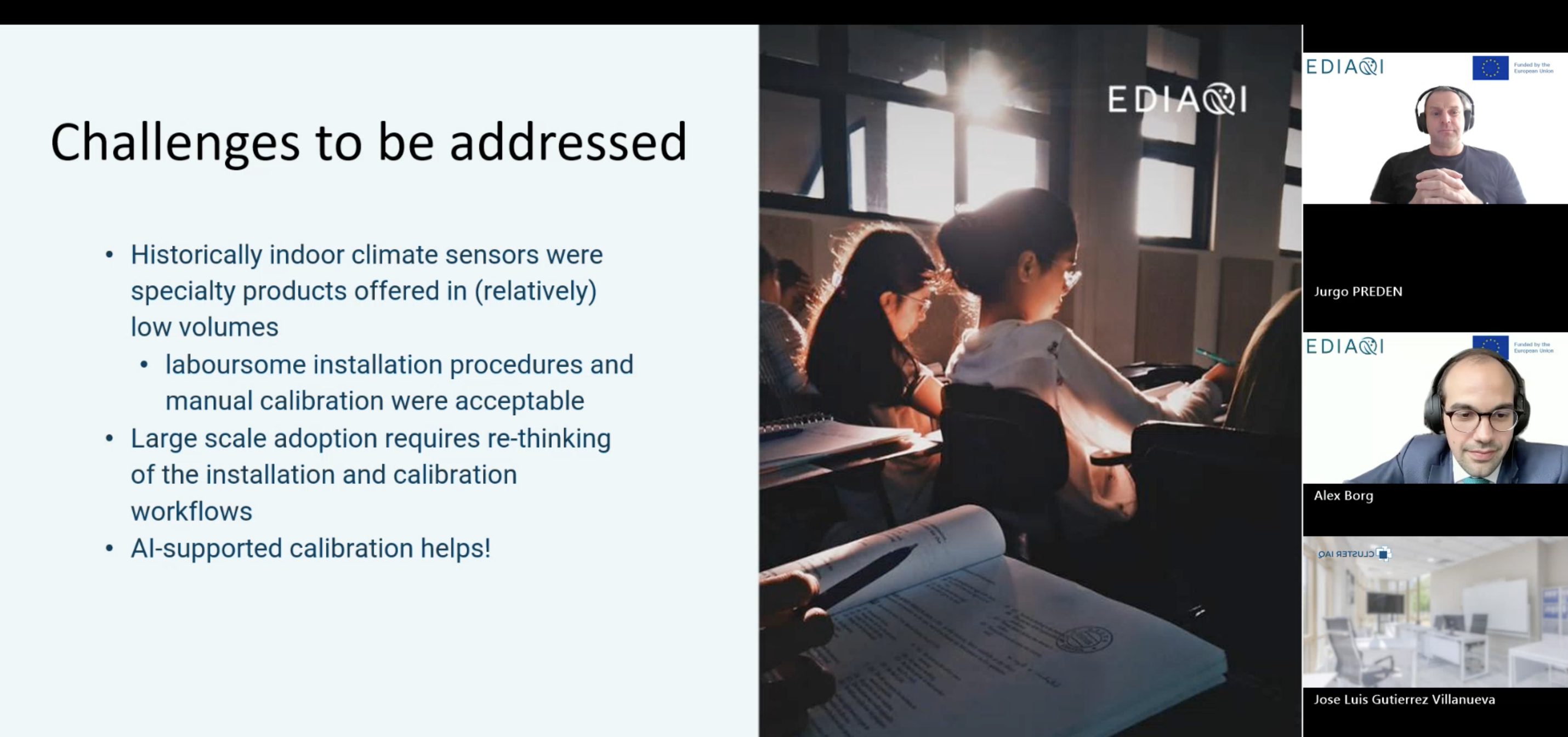
Dr Jurgo Preden (Thinnect) addressed the broader question of trust in AI-supported IAQ monitoring. Large-scale deployment, he argued, requires rethinking installation, calibration, and validation workflows. AI can support automation and anomaly detection, but trust depends on a transparent, scientifically validated data-to-information chain.
FAIR data principles, clear governance, and continuous oversight were highlighted as essential, particularly if AI-calibrated data is to be trusted by public authorities. His observation that simplicity can be harder to achieve than complexity captured the challenge of delivering reliable insights without burdening users with technical detail.
Key Takeaways
Three messages stood out:
- AI-driven calibration can significantly enhance low-cost IAQ sensors, including enabling in-field calibration and health-relevant analysis
- Trust, transparency, and governance are as important as accuracy, especially in sensitive or automated applications
- Scientific validation, FAIR data, and human oversight remain essential to responsible deployment
Watch the Recording and Stay Engaged
The full recording of The Promise and Perils of AI-Driven Sensor Calibration for Indoor Air Quality is available on the EDIAQI YouTube Channel, highlighting the strong complementarity between EDIAQI and NextAIRE in advancing evidence-based and trustworthy innovation for healthier indoor environments.